
New Ring-Shaped Rash That Spreads? What It Could Be and When to Call

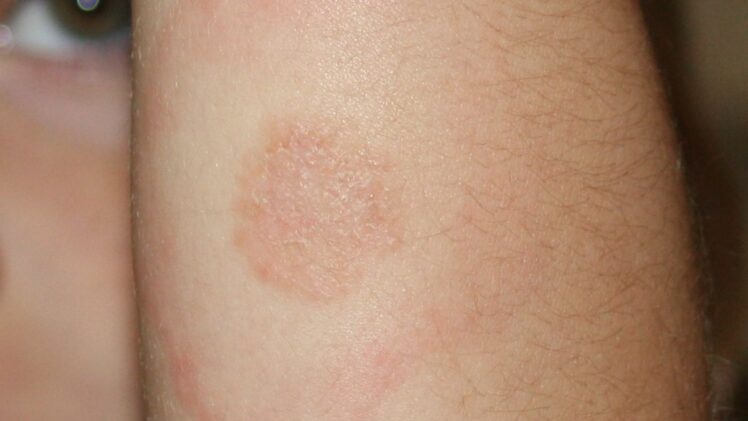
A reader wrote in saying that they have a new ring-shaped rash, and it seems to be spreading. They want to know what it might be, and whether they need to see a doctor.
According to the CDC, Ringworm is one of the most common causes of a circular rash. The Mayo Clinic states that ringworm on the body can appear as an itchy, scaly, slightly raised ring that starts small and expands outward. It may also have a clearer center, which is why people often describe it as a ring.
Verywell Health states that other skin problems can look similar. These include Lyme disease, nummular eczema, granuloma annulare, psoriasis, pityriasis rosea, contact dermatitis, hives, lupus-related rashes, and tinea versicolor. That’s why the shape alone is not enough to know what’s going on.
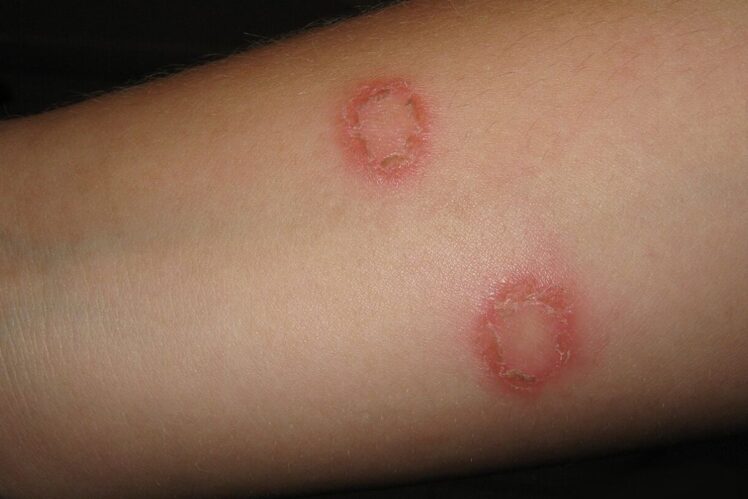
What can cause a ring rash?
A fungal infection is one clear possibility. Information from the CDC shows ringworm can spread through skin-to-skin contact, infected animals, shared towels, shared bedding, and contaminated surfaces like locker room floors. Pets can be part of the spread too, especially if they have patches of missing fur or irritated skin.
A tick bite is another potential cause. The CDC shows that Lyme disease can cause a rash that may look like a bullseye. Not every Lyme rash looks exactly the same, but a spreading circular rash after possible tick exposure should be taken seriously.
Other causes are less contagious but still worth seeing a doctor for.
- Eczema can cause coin-shaped itchy patches.
- Psoriasis may cause thicker, raised, scaly areas.
- Contact dermatitis may follow a new soap, lotion, plant exposure, detergent, or cleaning product.
Due to the array of possibilities, I’d be careful about assuming it’s “just dry skin,” especially if it’s spreading.
Symptoms that can help narrow it down

Ringworm can show up on the body, scalp, feet, groin, hands, beard area, or nails. Athlete’s foot and jock itch are both forms of ringworm too.
Look closely at the rash itself. Itching, scaling, raised edges, a clearer middle, and outward spreading may point toward ringworm.
However if it is painful, warm, swelling, oozing pus, blistering, or crusting, it may suggest infection or another problem.
Whole-body symptoms raise the stakes. If you have fever, chills, headache, fatigue, swollen lymph nodes, muscle aches, or joint pain matter, especially if there is possible tick exposure. These are not the kind of symptoms you want to wait weeks with, while hoping it fades.
When to see a doctor
A spreading ring-shaped rash should be checked by a doctor, especially if it is painful, warm, oozing, near the eyes, on the face, in the groin area, or not improving.
People with diabetes, immune system problems, or other chronic health issues should be even more cautious.
The CDC states that steroid creams can make ringworm worse. This is important as many people reach for over-the-counter anti-itch creams first. If the rash could be ringworm, using the wrong cream may make it harder to treat and harder to diagnose.
Any health changes, even a ring rash, should result in you seeing a doctor.
More About:Reader Questions