
A Mole That Looks Different? What Changes Should You Watch For?

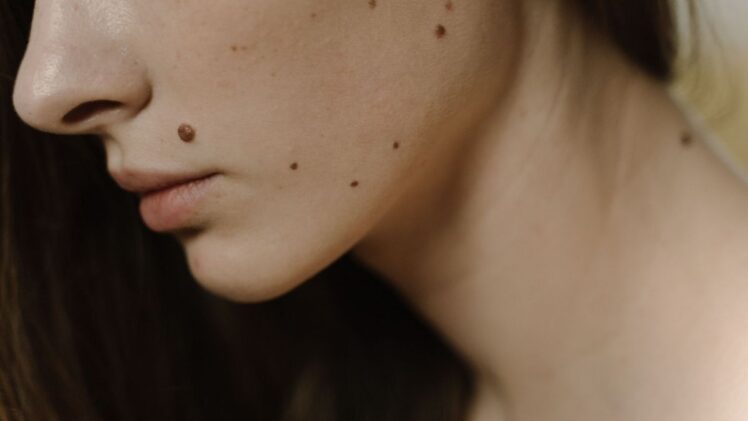
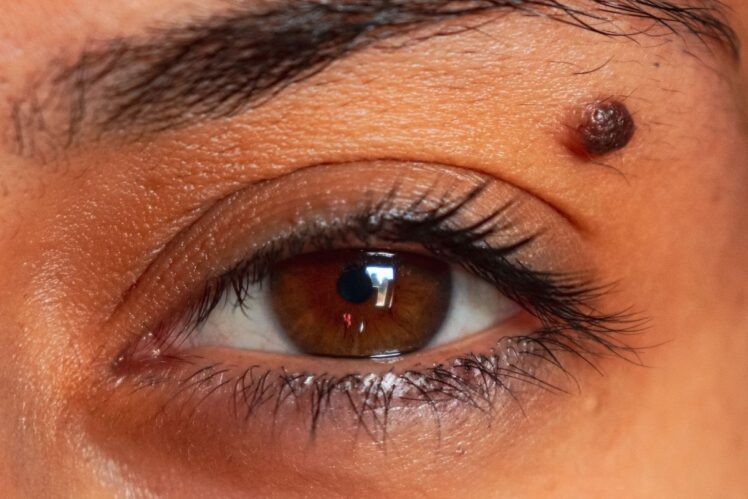
A reader wrote in asking about a mole that has started to look different. It is raised now, and the shape has changed. They want to know what signs to watch for, and whether a changing mole should be checked by a doctor.
Why mole changes matter
According to the National Cancer Institute, one of the first signs of melanoma can be a change in the shape, color, size, or feel of an existing mole. Melanoma can also appear as a new colored or unusual area on the skin.
That is why a mole that changes should not be ignored, especially if the change happens over weeks or months.
I’ve gotten old enough to know that small things are easy to explain away. Whether it be a weird ache or a mole that “probably always looked like that.” Most moles are harmless, but your skin is one place where guessing is not a great plan.
Some mole changes are normal
Henry Ford Health reported that moles can change during a person’s life. They may become raised, lose color, flatten, darken, or even disappear. A mole on the face, for example, may start as a brown patch and later become a flesh-colored bump.
That does not mean every raised mole is cancer. That assumption is not even close to being accurate. However, the important part is the pattern.
AIM at Melanoma states that normal mole changes usually happen very slowly. Changes that raise concern for possible melanoma often happen faster, over weeks or months.
Changes to watch closely
The National Cancer Institute uses the ABCDE rule to describe common warning signs of early melanoma. That stands for asymmetry, border, color, diameter, and evolving.
- Asymmetry means one half of the mole does not match the other half.
- Border means the edges look uneven, ragged, notched, or blurred.
- Color means the mole has uneven shades. That can include brown, black, tan, red, pink, white, gray, or blue.
- Diameter means the mole is getting larger. Many melanomas are larger than 6 millimeters, about the size of a pencil eraser, though some can be smaller.
- Evolving means the mole has changed over the past few weeks or months.
Any mole that keeps changing deserves attention.
Other signs that should get checked
Dermatology & Dermatologic Surgery Group of Northern Virginia adds that sudden or irregular changes can be warning signs. That includes a mole that becomes uneven, develops jagged borders, shows multiple colors, grows quickly, itches, bleeds, or crusts over.
Henry Ford Health also highlights that a mole with multiple colors, sudden black or red areas, spontaneous bleeding, or continued growth in adulthood should be checked.
New moles after age 50 are rare, so those should be discussed with a dermatologist too.
A rough, hard, lumpy, oozing, bleeding, itchy, tender, or painful mole is another reason to make the call. Information from the National Cancer Institute shows that these texture and feel changes can appear with more advanced melanoma.

What to do if a mole has changed
We recommend starting simple. So, take a clear photo in good light. Write down when you first noticed the change. Note whether it has grown, changed color, bled, itched, crusted, or become painful.
Then call your doctor or dermatologist. According to the National Cancer Institute, people should tell a doctor if they find a new mole or notice a change in an existing mole. A primary care doctor may refer them to a dermatologist.
Do not try to remove it at home. Do not pick at it. Do not wait months to “see what happens” if the mole is clearly changing.
There is one hard truth here, the only way to diagnose melanoma is to remove tissue and have it checked for cancer cells. A doctor can decide if that step is needed.
Most changed moles are not melanoma. Still, a mole that changes shape, size, color, texture, or behavior should be checked.
More About:Reader Questions