
Could Shifting Your Dinner Timing Lower Your Cancer Risk?

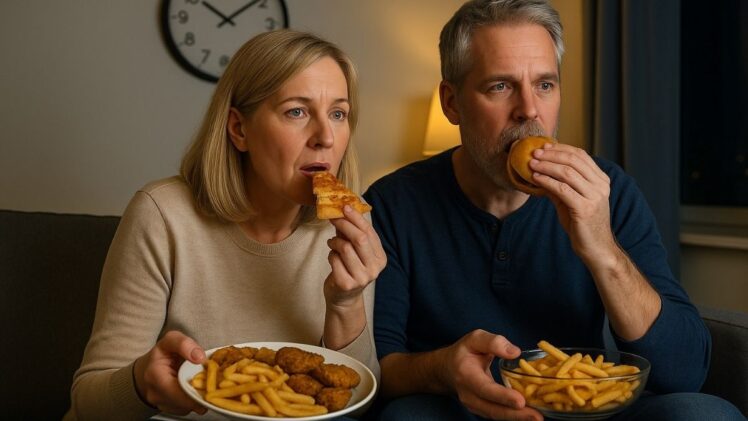
I’ve run food establishments and raised kids, so I know late meals happen. The bright lights, the clean-up, the quick “something” at 10 p.m. feels normal, but our bodies keep score. As the International Agency for Research on Cancer put it, night-shift work that disrupts circadian rhythms is “probably carcinogenic to humans.”
According to ISGlobal and the International Journal of Cancer, people who ate dinner before 9 p.m. or waited two hours after eating had roughly a 20% lower combined risk, with some breakdowns showing 26% lower prostate cancer risk in men and 16% lower breast cancer risk in women. ABC News reported similar figures when the study was released in 2018.
Simply put, finishing dinner at least two hours before bed is associated with a lower chance of breast and prostate cancer. That timing window matters.
Spain’s schedule, a useful contrast
In Spain, where late dinners are common, researchers could compare people who ate close to bedtime with those who finished earlier and left a buffer before sleep. The publication found that an earlier supper or a longer gap before bed aligned with lower odds of both cancers, even after accounting for lifestyle factors.
As mentioned previously, circadian rhythms are a factor. This is your 24-hour body clock. When meals hit late, the clock can drift, like a metronome set wrong. Data from IARC shows shift-related circadian disruption sits in Group 2A, meaning “probably carcinogenic,” which supports looking closely at timing, not just what we eat.
Heart and metabolism ripple effects
On blood pressure specifically, The Telegraph reported a cardiology finding from Turkey: eating within two hours of bedtime was linked to worse overnight blood pressure patterns than even a high-salt diet for people with hypertension. An ESC session listing credits Dr. Ebru Ozpelit’s 2016 presentation on late-night eating and non-dipping blood pressure.
Harvard Medical School notes that pushing meals later can raise hunger, reduce calorie burn after eating, and promote fat storage, which helps explain why late-night habits can snowball for older adults trying to maintain weight and sleep.
Easy changes to make
Here’s what works at my house and in a busy kitchen:
- Don’t cook two to three hours before bed. It’s a simple rule and as the ISGlobal summarized, it’s a buffer that might lower risk.
- When life runs late, keep it light. Soup, yogurt, a small egg plate. Harvard Health pointed to benefits of earlier eating on appetite and metabolism, so lighter late meals fit.
- Plan tomorrow’s meals long before you turn in. Health outlets like The Guardian note food choices get worse late at night. So, plan ahead, and don’t get caught out.
What we know (and what we don’t)
The Fred Hutchinson Cancer Center highlighted that dinner before 9 p.m. or a two-hour buffer was associated with lower risks. However, Popular Science also cautioned that these observational links are not proof of cause, which is an important distinction.
The truth is science moves in steps. ABC News reported the Spanish work as a careful case-control study, but not a clinical trial. Researchers called for testing in other populations to get a better understanding of these results. This is a reasonable scientific approach.
Therefore, this link should be considered rather than be taken as an absolute mandate.
Regardless, thinking about when you eat could be something to start asking yourself. If you can adapt, consider eating earlier when you can. Leave a two-hour gap before bed when you can’t. Real life isn’t perfect, but consistent timing is something many of us can try to achieve.
More About:Cancer