
Is Your Laundry Detergent Giving You a Rash?

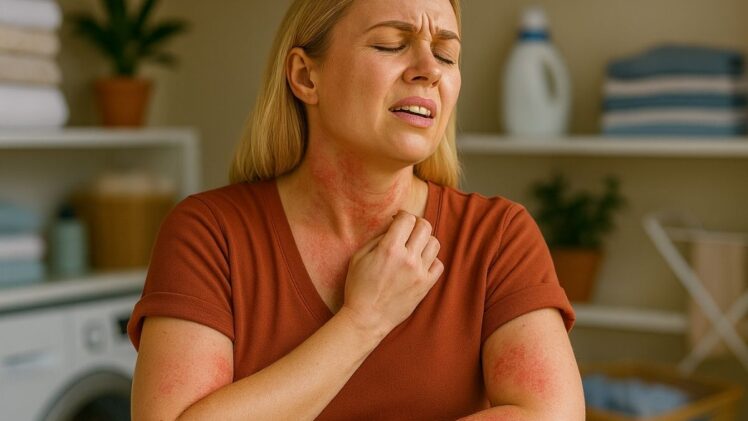
I’ve watched small changes in laundry detergent cause big flare ups. A new “fresh” scent seems fun, then your neck itches all day. You know it’s not your top as you’ve had it years, so what could it be? This pattern matters, so track what you change as laundry detergent allergies exist.
These allergies can look like red, itchy patches, sneezing, and even stinging eyes. Red patches that feel hot are a tell-tale sign, and in some extreme cases you may even see tiny blisters.
Why detergent can be the culprit?
According to the Cleveland Clinic, dyes, fragrances, and even using too much soap can irritate skin, especially if residue stays on clothes after the wash. A sudden brand switch can trigger a reaction, and unwashed new clothing can carry leftover chemicals from manufacturing or handling.
For example, a favorite sweater that prickles after two hours can be a clue. People often blame the fabric, yet the real offender may be detergent clinging to the fibers. Wash it again with a gentle, fragrance free formula and add a second rinse.
Hot, blotchy, and uncomfortable
Data from the Journal of the American Academy of Dermatology shows about 1% of a large test group reacted to sodium lauryl sulfate, a common surfactant used to lift dirt. It’s a small number, but a big frustration if you are in it.
DermNet NZ notes that cocamide DEA, a foaming agent derived from coconut oil, can strip natural oils and provoke allergic contact dermatitis in some people. As the U.S. Food and Drug Administration put it, individual ingredient sensitivities vary, and removing known irritants like certain fragrances or dyes can lower risk for sensitive users.
Additionally, the National Library of Medicine reported that concentrated laundry pods have caused chemical burns and serious irritation in the past, particularly when the film does not dissolve fully or the liquid contacts skin directly. That is a reminder to handle pods carefully, run full cycles, and confirm everything dissolves before clothes touch your skin.
If it happens to you?
Heat matters. I read that at the DSAP Institute, warm, tender patches or a burning feel on the rash are red flags for a contact allergy. Not every sneeze is detergent, and not every blotch is pollen. But hot, localized spots after wearing freshly washed items are worth attention.
If this happens to you, keep it simple when troubleshooting:
- Switch to fragrance free and dye free. The Cleveland Clinic notes this is a smart first step for sensitive skin.
- Use the measured dose, not a capful guess, to reduce residue.
- Add an extra rinse on towels and tees to clear leftovers.
- Rewash new clothes before the first wear to remove processing chemicals.
- Call your clinician if rashes persist or blister.
You could try to patch test at home. This is where you’ll wash one sleeve differently, wear it for a few hours, then compare the impact. This might be extra effort, but I assure you if you do it, and go to your clinician with that sort of detailed information, they’ll have more to go on and understand the actual problem. Patch testing can pinpoint the exact trigger, as JAAD guidance suggests.
Also, a short log helps a lot whenever going to your clinician. Quick notes on brand, load size, and settings make it easier to connect dots.
Extra steps
In my work life, we have to send a lot of materials to laundry. To make sure everything is done right, materials that are coming into regular human contact are separately washed with a gentle, low residue detergent, because constant skin contact plus heat is a recipe for irritation and it’s not worth impacting people’s health. That same approach at home can calm things down for sensitive skin.
Detergent allergies are not the most common, yet they are real. DSAP Institute notes that watching ingredients and wash routines can prevent flare ups. If a rash feels hot, if blisters show up, or if symptoms track with laundry day, change the product and talk with your doctor. These quick steps can help in fixing the issue (or at least figuring out the problem).
More About:Preventive Health